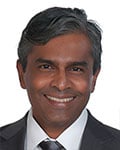
Author
Nandakumar Ponniya
Nandakumar (Kumar) Ponniya heads the Dispute Resolution Practice of Baker & McKenzie in the Asia Pacific.
He is widely acclaimed in international arbitration and cross-border litigation, with extensive experience in the areas of construction, technology, energy and financial services. His practice includes dealing with disputes arising from corporate and commercial matters, and managing multijurisdictional restructuring and insolvency. With over 25 years' experience, Kumar has handled disputes and matters across various industry sectors and jurisdictions, serving clients in Asia and beyond. He is qualified to practice in Singapore, England and Wales and New York; and is also a fellow of the Chartered Institute of Arbitrators.
Kumar is listed as a leading international arbitration lawyer in the Legal 500 Asia Pacific, is recognized for his capabilities in Construction and in Arbitration by Chambers Asia Pacific, as well as named a Litigation Star by Benchmark Litigation Asia Pacific for Construction and for International arbitration. Chambers Asia Pacific commended "the 'well respected' Nandakumar Ponniya for having led commercial and investment arbitrations’ and notes that he "stands out for his quickness and perspicacity". He has also been described by clients as having "excellent advocacy skills" (Chambers Asia Pacific), being "intellectually sharp and street smart" (Legal 500) and "extremely technically proficient and commercially savvy" (Chambers Global). He has also been listed in the Guide to the World's Leading Experts in Commercial Arbitration. Kumar is also ranked as a Recommended practitioner by Who's Who Legal in its Southeast Asia: Arbitration guide. Kumar also regularly sits as arbitrator and has acted as sole arbitrator and as presiding arbitrator under various arbitral rules and regimes.
In litigation, Kumar has appeared as counsel before all divisions of the Singapore Courts, including the Singapore International Commercial Court and the Court of Appeal. In arbitration, he has sat as presiding arbitrator in high value disputes and as counsel, has had conduct of international arbitrations involving all the major arbitral rules with hearings in multiple jurisdictions. Further, Kumar is skilled in a range of alternative dispute resolution mechanisms, including adjudication and mediation, to help clients resolve complex disputes and avert the need for time-consuming and costly litigation or arbitration. In addition to disputes, Kumar has vast experience in front-end risk advisory work and risk management or mitigation.
Aside from practice, Kumar has served as an adjunct assistant professor at various universities such as the National University of Singapore, the Singapore Management University, Universitas Pelita Harapan (UPH) and ESSEC Business School.
Kumar also serves on statutory tribunals such as the Law Society’s Inquiry Panel.
Kumar has a broad focus on dispute resolution with a focus on international arbitration, commercial litigation, and corporate restructuring and insolvency. Kumar has an in-depth understanding of the legal and regulatory frameworks of the major Asian markets. His wealth of experience is drawn from handling disputes for government, state-owned enterprises, multinational corporations and regional industry leads arising from a variety of commercial transactions and investments, as well as complex engineering and development projects in Singapore, ASEAN and the wider Asia Pacific region.
He has had conduct of international arbitrations involving all the major arbitral rules including ICC, SIAC, HKIAC, KLRCA, BANI, UNCITRAL and ICSID; with hearings in multiple jurisdictions such as Singapore, Kuala Lumpur, Jakarta, Hong Kong, London and Mexico City. He also advises on investment arbitration, particularly in relation to matters in Asia.
Kumar's litigation experience encompasses disputes in the areas of corporate and commercial law, banking and financial services, construction law and corporate restructuring. He has acted for clients across various industry sectors such as banking and financial services, infrastructure and construction, oil and gas, power, technology and telecommunications.
He is well-versed in the mechanics of corporate restructuring and has a keen understanding of insolvency regimes across the region. He has significant experience with several large and complex restructuring deals relating to major projects in Singapore and the region, as well as the distressed debt restructuring of many large corporations in Asia.